
 Polski
 Čeština
 Slovenčina
 Deutsch
 Italiano
 Español
WEEE on Amazon: A complete guide to the regulations
Selling electronics on Amazon offers huge opportunities to scale your business, but it also demands strict compliance with EU environmental standards. The absolute foundation of these requirements is the WEEE Directive, which governs how electrical and electronic equipment is placed on foreign markets. In practice, this means every seller has to complete the registration formalities in each regional market, regularly report the weight and number of devices sold, and pay fees for their eventual disposal.
 Aneta PiechotaE-commerce Sales Expert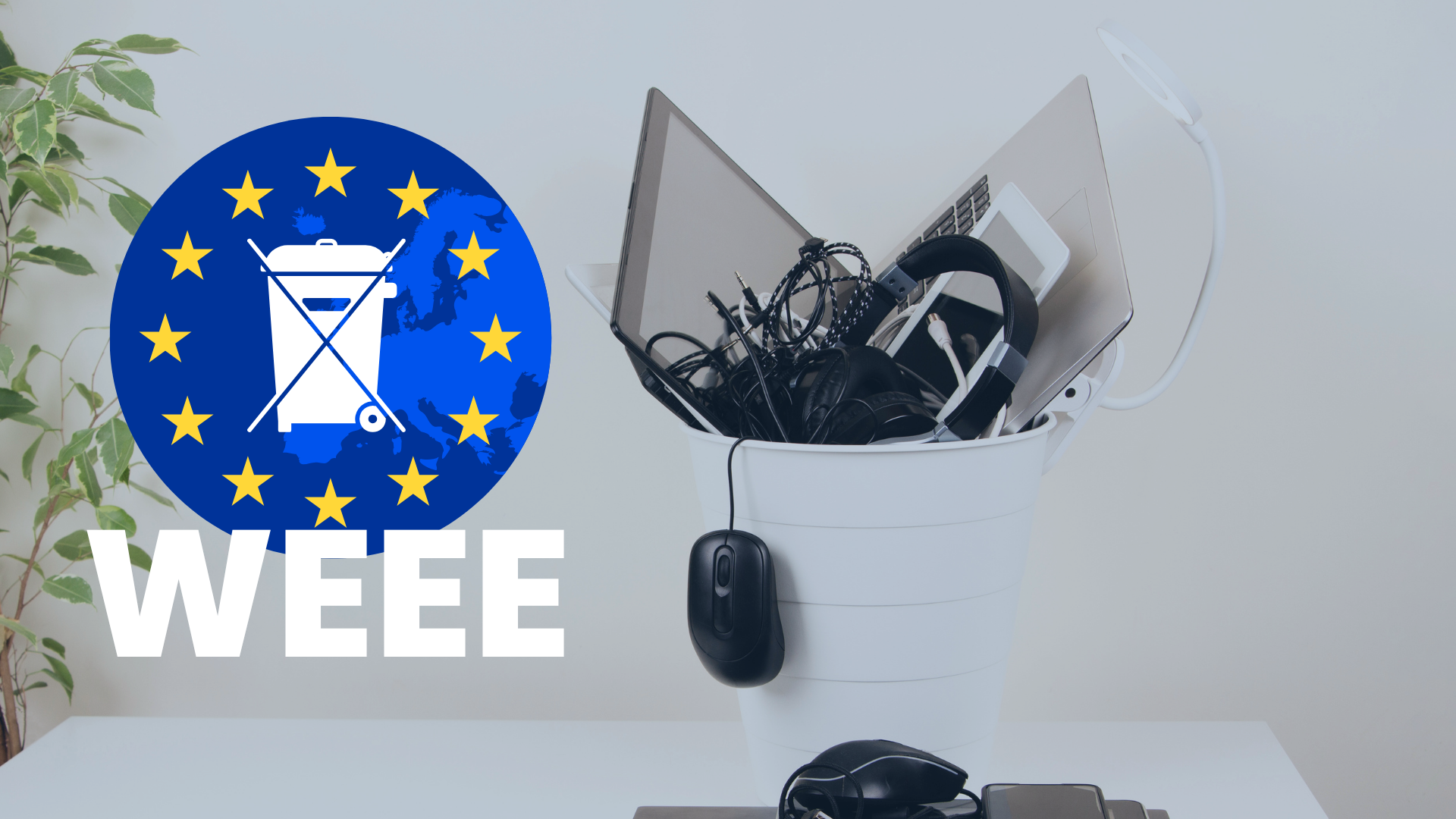
From my day-to-day work in Amazon account management, I know one thing: WEEE formalities aren’t a ‘nice to have’ but a hard requirement, without which you simply can’t trade. Every day I see how meticulously Amazon scrutinises registration numbers – such as the German WEEE-Reg.-Nr. issued by EAR or the French identifier from SYDEREP – checking them directly against government databases. If the correct number is missing in Amazon Seller Central, or your company details differ from those in the register by so much as a typo, the platform automatically blocks your listings in that marketplace, cutting off sales on the spot.
In this article, I’ll cover the most important issues around the WEEE Directive on Amazon. I’ll explain in plain terms what these regulations are and who is required to register. You’ll also learn how to add your number correctly in Seller Central and which mistakes to avoid to keep your listings from being blocked.
What is the WEEE Directive and why does it apply to Amazon sellers?
The WEEE Directive (Waste Electrical and Electronic Equipment) is an EU regulation based on the principle of Extended Producer Responsibility (EPR). It requires companies that place electrical and electronic equipment on the market to finance its eventual collection and recycling.
 Producers’ fees under the WEEE system fund the eventual collection and recycling of used equipment.
For Amazon sellers, the directive is crucial, because anyone who is first to place a product on the market of a given country is legally considered a ‘producer’. This applies not only to manufacturers, but also to importers from outside the EU, owners of Private Label brands and businesses selling cross-border. Being registered in one country (e.g. in Poland’s BDO register) does not entitle you to sell electronics to consumers in Germany or France – each market requires a separate registration.
Amazon’s strict enforcement of these rules stems directly from EU legislation that has made marketplace platforms liable for illegally offered goods. Without a verified WEEE number in Seller Central, your listings are automatically blocked in that marketplace. For an online seller, this means not only an immediate drop in revenue, but also the risk of heavy fines and additional storage costs for blocked stock in FBA fulfilment centres.
Who is required to register for WEEE on Amazon?
The WEEE registration requirement on Amazon applies to every seller who is the legal producer of electronics in a given market. Under EPR rules, it’s not just factories that have this status, but also companies selling under their own brand, importers of equipment from outside the EU and businesses selling cross-border (e.g. shipping goods from Poland to customers in Germany). An entry in Poland’s BDO register does not give you the right to sell in foreign markets.
The obligation applies equally to the FBA and FBM models, and it kicks in from the very first unit sold of any device powered by electricity or batteries. Failing to meet recycling obligations and not having a verified WEEE number in Seller Central leads to your listings being blocked immediately.
Leaving the formalities undone directly threatens the continuity of your sales. Without an active, verified WEEE number in Seller Central, your listing is suppressed immediately in that regional marketplace. The product becomes unavailable to buyers, and your FBA stock turns into stranded inventory, which generates extra costs and exposes your account to sanctions from foreign authorities.
Selling electronics with FBA vs FBM
The logistics model you choose for selling electronics on Amazon directly affects your costs, the visibility of your listings and how returns and complaints are handled. Sellers can choose between FBA (Fulfillment by Amazon), where the platform takes over all the warehousing, and FBM (Fulfillment by Merchant), where sellers ship orders themselves.
The FBA model is the fastest route to scaling sales of small and mid-sized electronics. The Prime badge dramatically boosts conversion and makes it easier to win the Buy Box. However, it requires compliance with strict procedures for dangerous goods (equipment with lithium-ion batteries) and carries the risk of higher fees for returns, which Amazon automatically classifies as unsellable.
The FBM model works well for bulky equipment, allowing you to avoid Amazon’s high storage fees. It also gives full control over stock and complaints handling – the seller can assess the condition of returned goods themselves, refurbish them and put them back on sale. The challenge with FBM, however, remains competing for conversions against lightning-fast Prime deliveries.
Whichever model you choose, WEEE and EPR rules apply to exactly the same extent. Selling electronics to consumers in Germany or France – whether via FBM from a Polish warehouse or from an FBA fulfilment centre – requires obtaining local registration numbers and having them verified in Seller Central. In both cases, failing to register ends in an immediate sales block.
How do you add your WEEE number in Amazon Seller Central?
Entering your Amazon WEEE number in Seller Central requires precision, because the platform verifies the details directly against national recycling registers, such as the one run by the EAR Foundation in Germany or the SYDEREP system in France.
When a product from the electronics or battery-powered devices category appears in your catalogue, Amazon’s system generates a line in Seller Central that requires you to confirm compliance. To enter the number, go to the account status section (Amazon Account Health), open the dashboard dedicated to EPR regulations (Regulatory Compliance) and find the entry displayed for the relevant country and category. The registration number you’ve obtained goes into the designated field.
Perfect data consistency is key: the company name, address and tax identification number (NIP) in your Seller Central account must fully match the information in the official database of the country concerned. Once the form is submitted, Amazon verifies the entry – this usually takes anywhere from a few days to two weeks. Successful verification activates selling in that marketplace and definitively protects your listings from automatic blocking.
The most common mistakes and the consequences of not having a WEEE number
Despite the clearly defined Extended Producer Responsibility (EPR) requirements on Amazon, many business owners still make costly mistakes. The most common error is believing that a Polish BDO entry entitles you to offer goods throughout the European Union. Every seller placing electronic products or battery-powered devices on the market in Germany or France is legally required to obtain a separate registration with the local authorities responsible for recycling and packaging management.
 An entry in Poland’s BDO register isn’t enough: every EU country you sell to requires a separate registration.
Another common problem is putting the procedure off until the platform sends a warning, along with a lack of strict data consistency. If the company details in your Seller Central account differ even slightly from the entry in the official register, verification will be rejected. Sellers also often mix up device categories or forget that importing goods from outside the EU places a producer’s obligations directly on them.
The consequences of not having an Amazon WEEE number hit a business hard. Without an active registration, important information about the product is no longer available and Amazon automatically blocks sales. For FBA listings, the blocked goods become stranded inventory, creating the risk of having to pay for the stock to be removed or disposed of. Prolonged unavailability destroys the listing’s SEO ranking, and foreign authorities can also impose heavy fines and an outright ban on placing the product on the market.
Summary
Properly completing the formalities related to the WEEE Directive and the Extended Producer Responsibility (EPR) system is now a key pillar of safe and profitable electronics sales on Amazon. However, meeting your obligations for recycling, battery registration and packaging disposal in countries such as Germany takes time and absolute consistency of the company data in your Seller Central account.
Ignoring legal requirements or putting off registration until the last minute will inevitably paralyse a business. The consequences of not having an active WEEE number – from blocked listings to lost search rankings and severe fines – can quickly wipe out your sales potential in foreign markets. Planning the registration process early and ensuring full legal compliance is the simplest way to guarantee continuity of sales and build a stable brand position in e-commerce.
Want to grow your Amazon sales safely, without unnecessary risk or wasted time? Get in touch and book a free consultation. We’ll analyse your products’ potential, choose an effective strategy and make sure your Amazon account is managed professionally.
Did you find this article helpful?
This article has no ratings yet — be the first.
Autor
Aneta Piechota
E-commerce Sales Expert
I’m a marketing and e-commerce enthusiast with over four years of marketplace experience. I specialise in the Amazon ecosystem, particularly in high-performance advertising. During my career, I’ve also worked with Allegro, where I scaled sales for a private-label brand. I hold a degree in Logistics Engineering, and outside of the office, I practice yoga and have a keen interest in psychology, which helps me understand the “why” behind consumer behaviour.