
 Polski
 Čeština
 Slovenčina
 Deutsch
 Italiano
 Español
What is Amazon FBA? Definition and costs of Fulfillment by Amazon
If you are considering using Fulfillment by Amazon (FBA) to scale your business, you are in the right place. In this guide, we will unpack how this logistics model actually functions on a day-to-day basis. You will learn about the main benefits, the potential pitfalls, and the crucial factors to consider before integrating this setup into your e-commerce operations. We will also delve into the ope
 Wojciech PiszczekCEO & Founder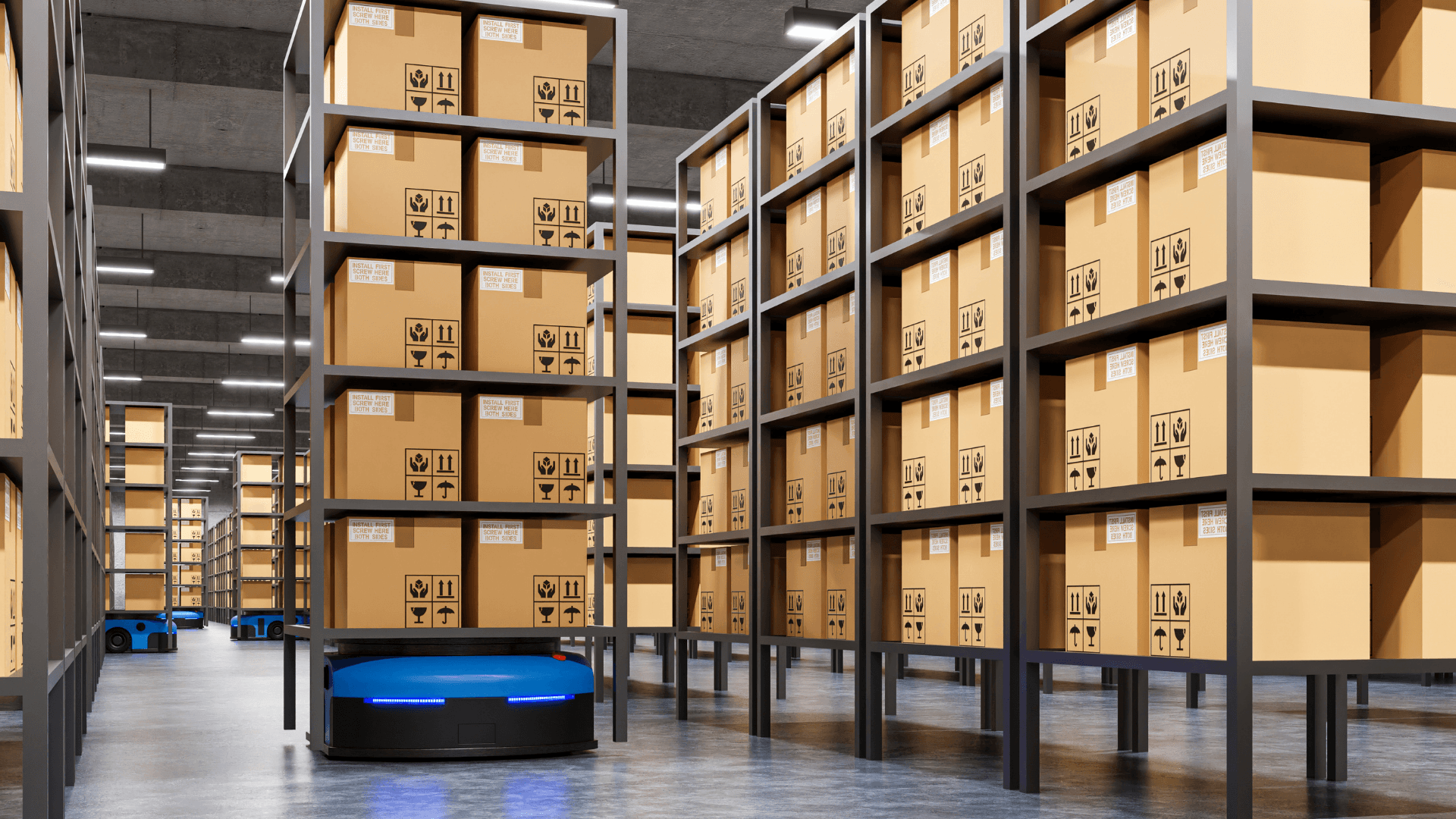
For many brands, Fulfillment by Amazon has served as the ultimate growth engine, enabling rapid, month-on-month scaling across European markets. However, for businesses that jump in underprepared or view it through rose-tinted glasses, it can easily become a costly mistake. This usually happens when capital gets tied up in slow-moving stock, compounded by ever-increasing storage fees. Because of this, the decision to use Amazon’s logistics network requires careful thought, strategic planning, and a highly professional approach. Let’s define Amazon FBA properly and see if it is the right move for your cross-border strategy.
What exactly is Amazon FBA and how does Amazon FBA work?
For anyone wondering ‘what is FBA?’, it is essentially an end-to-end logistics and fulfilment service where Amazon takes full responsibility for storing, picking, packing, and dispatching your products to the end customer. Grasping the meaning of FBA in Amazon really boils down to one thing: outsourcing your operational heavy lifting.
As an Amazon FBA seller, your only job is to properly prep your inventory and ship it to one of Amazon’s fulfilment centres across Europe. Amazon even handles the customer service side of things – managing email and telephone enquiries, as well as processing returns. Ultimately, this model is a brilliant solution for growing businesses looking to confidently sell on Amazon and expand into new international markets without the headache of setting up local infrastructure.
Is Fulfillment by Amazon the right fit for your business?
Before diving in, you need to work out whether selling in Amazon FBA actually aligns with your wider business strategy. This is especially true if you are building a private label brand from scratch. Here are a few guiding questions to help you figure that out:
Does your product size and weight suit FBA?
If your products are lightweight, compact, and turn over quickly, it makes perfect sense to store them in an Amazon warehouse to stay competitive. In the vast majority of cases, dispatching these types of items via Amazon’s network is simply more cost-effective than fulfilling individual orders from your own facility. This operational efficiency allows you to offer much more attractive pricing to your potential buyers.
Analysing your competitors’ logistics strategies
Before launching, you should always look at how your competitors are approaching the marketplace. If the top 100 products in your target category are exclusively handled by Amazon, it is a glaring signal that you need to do the same if you want to capture a meaningful market share. Prime-eligible listings generally receive a significant boost in Amazon SEO, meaning you lose out on crucial visibility if you decide to go it alone.
That said, when weighing up FBA vs FBM (Fulfillment by Merchant), you should take this analysis with a pinch of salt. Just because your competitors are fulfilling orders themselves, it doesn’t automatically mean you should follow suit. They might simply be unaware of the platform’s potential, or perhaps they are dealing with internal supply chain bottlenecks. By placing your product in their fulfilment centres, you could easily gain a massive competitive edge and become a dominant force in that specific niche.
Ensuring your products can be stored safely
Many sellers jump the gun, sending goods off without the necessary compliance documents or safety certificates. Amazon’s restricted products list is extensive, so we highly recommend reviewing it thoroughly. Restrictions heavily impact categories like cosmetics, dietary supplements, and electronics. Amazon enforces these rules strictly, which can quickly lead to suppressed listings, account suspensions, or even the disposal of your non-compliant inventory (Hazmat).
How to get started with Amazon FBA
Launching your products requires a calculated approach. For example, if your catalogue features 1,000 different bathroom fixtures – such as shower seals, basin taps, or showerheads – you cannot afford the upfront risk of sending your entire inventory over on day one. We generally suggest two different routes:
- Test the waters with FBM first: List your products using the FBM model, shipping directly to the end customer from your own warehouse. Keep a close eye on your initial sales data to identify your bestsellers and the items with the lowest customer acquisition cost via paid traffic. Based on these insights, you can confidently send an initial batch (e.g., 20–50 units) of your FBA inventory into the fulfilment network. The main advantage here is that your decisions are backed by real market data. If a product moves well from your own warehouse, giving it the Prime badge will drastically increase your chances of winning the Buy Box and provide a massive sales boost. The downside? Some products might struggle to sell precisely because they lack that Prime badge, especially if you are up against established competitors who dominate the space.
- Dive straight in: Alternatively, you can start directly with Amazon’s logistics by selecting your most promising products based on deep competitor analysis and existing sales data from other platforms (like your own website or B2B channels). The benefit of this route is a rapid launch and a naturally lower customer acquisition cost through Amazon PPC, as you are directing traffic straight to a Prime-eligible listing. Prime guarantees ultra-fast delivery across Europe, which is a massive conversion driver. The risk, however, is sending unproven stock. If the market rejects your product, you will be left with tied-up capital and mounting storage fees.
For a brand new launch, we usually advise our clients to send around 20–30 SKUs to an Amazon fulfilment centre to start with. Naturally, this varies depending on your industry, product portfolio, and overall expansion goals.
The main advantages of using Amazon FBA
- Fast Amazon Prime delivery: Shoppers, particularly loyal Prime members, actively filter for the Prime badge, which guarantees fast, free delivery. Using this service is the most straightforward way to secure this badge for your listings.
- Expansion into foreign markets: It allows sellers to reach new audiences and scale quickly across borders. For international businesses, Western markets – particularly the UK, Germany, and France – are highly lucrative targets for expansion.
- Multi-channel support: You can use your warehoused inventory to fulfil orders from other platforms (like Kaufland, eBay, Cdiscount, or your own online store) via Multi-Channel Fulfilment. This makes wider international expansion significantly easier.
- Brand credibility: Because customers inherently trust items that are shipped by Amazon, Prime-badged products generally command higher customer trust, which translates into better conversion rates and higher organic search rankings.
- Hands-off order processing: When you break down what Fulfillment by Amazon actually means for your daily operations, it means Amazon does the heavy lifting. They store your goods and seamlessly manage the entire fulfilment process – picking, packing, and dispatching. This allows you to drastically reduce your own warehouse space and overheads, freeing up your time to focus on product sourcing and brand growth.
- FBA customer service: Amazon takes the lead on customer care. They manage complaints, answer delivery queries, and process returns seamlessly, saving your team a tremendous amount of time.
- Account health protection: By outsourcing your logistics, you ensure that your Amazon seller account metrics remain flawless, protecting your overall standing on the platform.
- Low-price FBA rates: For sellers offering small, inexpensive items, Amazon provides specialised, lower rates designed to keep fulfilment costs manageable for cheaper inventory.
The potential drawbacks of Amazon FBA
- The financial cost: Using the service incurs fees that can take a significant chunk out of your profit margins. We will break down Amazon FBA pricing in the next section.
- Dependence on Amazon’s policies: Using their infrastructure means tying your business closely to Amazon’s ecosystem. Issues like listing suspensions or tax compliance hurdles can suddenly freeze your stock and block your account, often entirely out of your hands.
- Fierce competition: Bear in mind that your competitors are likely using the same tools. If you want to successfully make money with Amazon FBA over the long term, you must continuously optimise your listings and build a strong brand presence to stand out from the crowd.
- Slow-moving stock: There is always the risk of poor inventory turnover, which will generate substantial additional costs over time.
- Product restrictions: Amazon strictly regulates certain categories. Always verify your product’s status (e.g., checking for Hazmat classification) in Seller Central before booking a shipment.
Understanding Amazon FBA costs and FBA fees
To set competitive yet profitable prices, you need a clear understanding of your overarching Amazon FBA costs and FBA fees. We highly recommend running your numbers through an FBA calculator before launching, as pricing is generally split into the following categories:
- Storage fees: Simply put, the longer your inventory sits, the higher the fees. Costs skyrocket if your goods remain in a fulfilment centre for over 269–365 days. Long-term storage is highly discouraged; Amazon’s business model relies on fast inventory turnover, and they penalise stagnant stock heavily to force sellers to liquidate.
- Fulfilment fees: A flat fee per unit, calculated based on the item’s dimensions and weight.
- Additional costs: This covers extra services like returns processing, inventory removal or disposal, labelling, and prep work.
Available Amazon FBA programmes in Europe
For sellers operating within the European Union, there are several setups available to suit your cross-border strategy:
- CE (Central Europe): Inventory is stored across fulfilment centres in Poland, Germany, and the Czech Republic.
- EFN (European Fulfilment Network): This allows you to store inventory in your local country while fulfilling orders across all other European Amazon marketplaces.
- MCI (Multi-Country Inventory): You dispatch your stock to specific, selected countries, enabling faster local delivery for those target markets.
- Pan-EU (Pan-European FBA): Orders are fulfilled from a single inventory pool, regardless of which European market the customer is located in. Amazon distributes the stock across its network at its own discretion, eliminating cross-border fulfilment fees for the seller.
Navigating VAT compliance with Amazon FBA
By now, we understand whether this is the right fit, the costs involved, and the best sales strategies. However, there is one more critical administrative hurdle to clear: VAT compliance. Specifically, you need to get your head around the VAT OSS (One Stop Shop) scheme and the local VAT requirements of the countries where your goods are warehoused.
If you send stock to be stored in Germany, for example, you absolutely must hold an active German VAT number (VAT-DE). This rule applies to any European country where your goods are physically stored. Sending inventory to a German fulfilment centre without a valid VAT-DE number will result in an immediate block on your inventory until you provide the correct local tax documentation.
Registering for foreign VAT can often take 2–3 months. Because of this, when first starting out, we often advise sellers to keep their initial stock in local fulfilment centres and utilise the VAT OSS procedure while waiting for their foreign VAT registrations to process. This ensures you do not lose valuable trading time.
As your sales grow in markets like France, Italy, or Spain, we highly recommend registering for local VAT in those territories too. Placing your best-selling stock directly in local fulfilment centres drastically cuts delivery times to the end customer and reduces your overarching shipping costs. Finally, Amazon also offers a COS (Call-off Stock) programme, which allows sellers to store inventory in a chosen country without immediately needing a local VAT number under specific conditions, though it remains a somewhat niche solution for now.
Summary
Amazon’s logistics network empowers even the smallest independent sellers to compete head-to-head with major industry players on a global scale. The key to success is fully understanding exactly what this model entails. In some categories, using it is an absolute necessity if you want to survive; in others, it might be unviable due to tight margins and storage fees. It is vital to thoroughly analyse your portfolio and approach your expansion professionally to avoid costly mistakes. Prepare diligently, crunch the numbers, and make an informed decision!
If you are an international brand looking to confidently expand your e-commerce presence across Europe, book a free consultation with our marketplace experts today. We are here to help you scale smoothly.
Did you find this article helpful?
Average rating 5.0 / 5 — 12 votes
Autor
Wojciech Piszczek
CEO & Founder
I’ve been immersed in e-commerce for more than ten years, with a core focus on helping brands scale onto international platforms like Amazon, eBay, Kaufland, and eMAG. My experience covers the entire sales lifecycle—from high-level strategy and logistics to marketing and conversion optimisation. I help businesses not only enter new markets but scale sustainably, ensuring they avoid the costly pitfalls often faced by those just starting out.