
 Polski
 Čeština
 Slovenčina
 Deutsch
 Italiano
 Español
Step-by-step LUCID registration: Everything you need to know about the packaging register
Running a modern e-commerce business isn’t just about the bottom line; it’s also about environmental responsibility. When expanding internationally and selling in Germany, sellers must navigate strict legal regulations designed to reduce waste, taking the necessary steps to ensure full compliance. Championing sustainability is no longer just a trend – it’s a critical component of international gro
 Marcin TruchE-commerce Team Leader
For European businesses – whether you are launching your own brand or acting as a distributor for other manufacturers – registering with the LUCID Packaging Register is a fundamental step when entering the German market. But why is it so crucial? How does the registration process actually work? And what are the tangible benefits for your operations? If your business ships packaged goods to Germany, this applies to you.
In this guide, we’ll break down the requirements and provide practical advice to help you see LUCID not just as a legal hurdle, but as a genuine opportunity to scale your business sustainably.
What is the LUCID register and why is it so important?
LUCID is the official database managed by the German Central Agency Packaging Register (Zentrale Stelle Verpackungsregister, or ZSVR), established under the German Packaging Act (Verpackungsgesetz, or VerpackG). This legislation regulates the placement of packaging on the German market, meaning companies must register, report data, and pay system participation fees. The ultimate goal of VerpackG is to minimise packaging waste, boost recycling rates, and promote a circular economy through extended producer responsibility.
For e-commerce sellers eyeing German expansion, LUCID registration is a legal mandate, but also a chance to build brand trust. Today’s consumers actively look for environmentally conscious brands. Ensuring strict compliance with the Packaging Act and accurately reporting your foreign sales data – detailing the exact packaging used – is now a key part of any wider business strategy.
Who needs a LUCID number
The obligation to register applies to anyone who places packaged goods onto the German market commercially. It doesn’t matter if you’re a massive manufacturer, a boutique online store, or a mail-order business. If you ship packaged goods to private end consumers in Germany, you must comply and register your business. Crucially, VerpackG has no minimum threshold – even a single parcel triggers the requirement.
The following entities are legally obligated to register:
- Packaging manufacturers: Companies producing and distributing packaging (primary, secondary, or transit) in Germany.
- Importers: Businesses bringing packaged goods across the border into the German market.
- Mail-order businesses: Retailers fulfilling and shipping orders in packaging to German consumers, regardless of whether they are based in Germany or abroad.
- International online retailers: Any e-commerce storefront delivering packaged goods to private German buyers. This applies equally to major marketplaces and independent shops.
- Businesses using transit packaging: Manufacturers or sellers introducing shipping materials like cardboard boxes or pallets.
Every entity listed above must complete their Initial registration with the LUCID database to legally operate in Germany. Non-compliance can lead to hefty fines or even a complete ban on selling in the country. We always remind our marketplace partners that this is a critical requirement you simply cannot afford to ignore.
LUCID registration process in a few basic steps
Registering is straightforward but requires meticulous attention to detail. To simplify the process and help you avoid common pitfalls, we’ve outlined the key steps below:
1. Create a login in the LUCID Packaging Register
Registration is done via the official portal: lucid.verpackungsregister.org.
The process can be completed entirely in English, which makes it highly accessible for international sellers. First, you need to set up your account by providing basic contact details and creating a secure password.
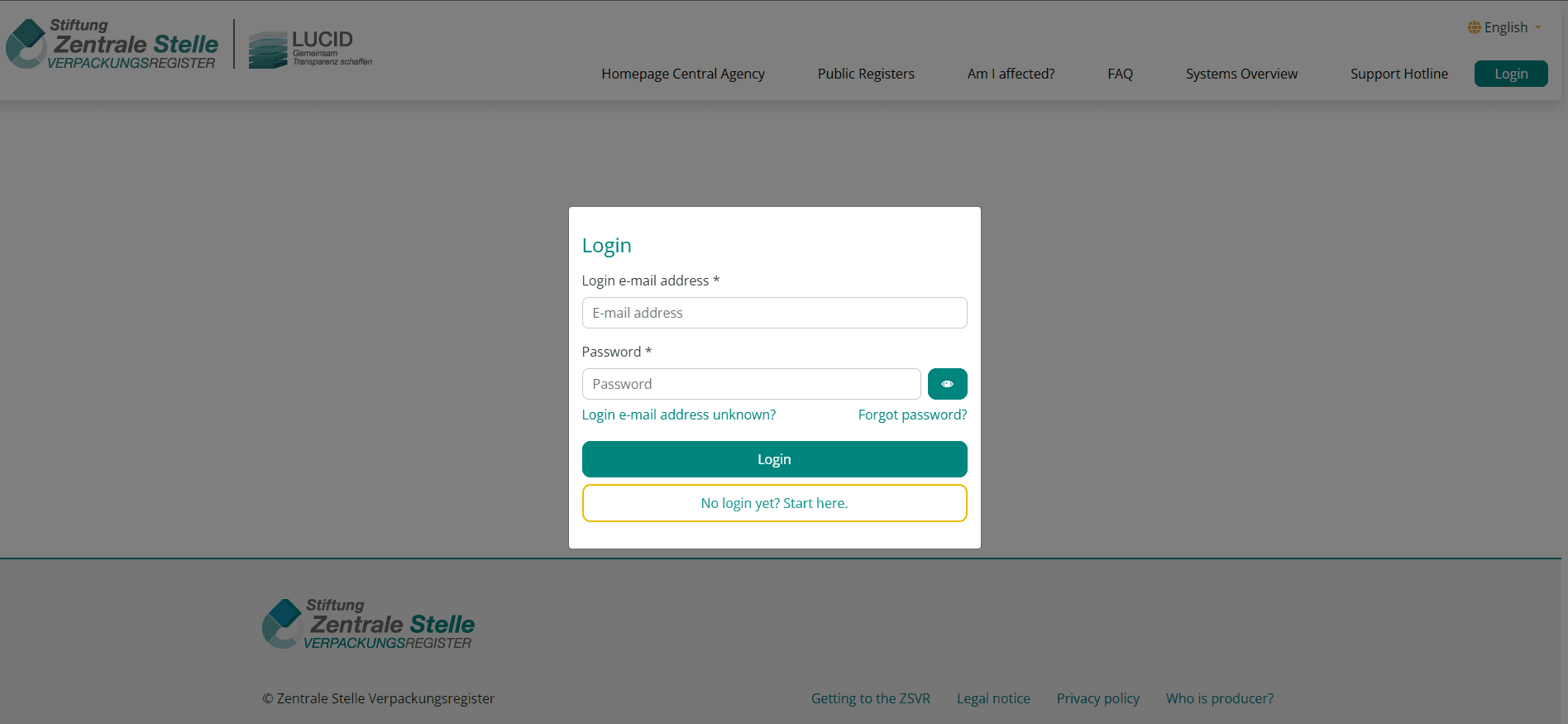
Creating an account
2. Provide your company details (Initial registration)
During the registration process, you’ll need to input specific company information:
- Company name
- Registered address
- VAT number (if applicable)
- National identification number (e.g., Company Registration Number)
- Details of the authorised representative (name, job title, contact details)
Ensure all details perfectly match your official business documents, as discrepancies can cause significant delays; once issued, your LUCID number is unique to your business and serves as proof of registration for marketplaces like Amazon and eBay.
3. Declare packaging types and volumes (Data reporting)
Next, you must estimate the volume and types of packaging you plan to introduce to the German market for the calendar year. You must specify:
- Packaging types (e.g., retail packaging, grouped packaging, shipment packaging)
- Material fractions (e.g., plastic, glass, paper/cardboard, aluminium)
- Packaging mass (in kilograms)
This applies to all packaging that ultimately ends up with a German end consumer.
4. Enter into a system participation agreement (Dual system)
Once registered in LUCID, you must sign a system participation agreement with one of Germany’s official packaging recovery organisations (known as a “dual system”). A popular example is Interseroh+ via Lizenzero: [https://www.lizenzero.de/en/](https://www.lizenzero.de/en/).
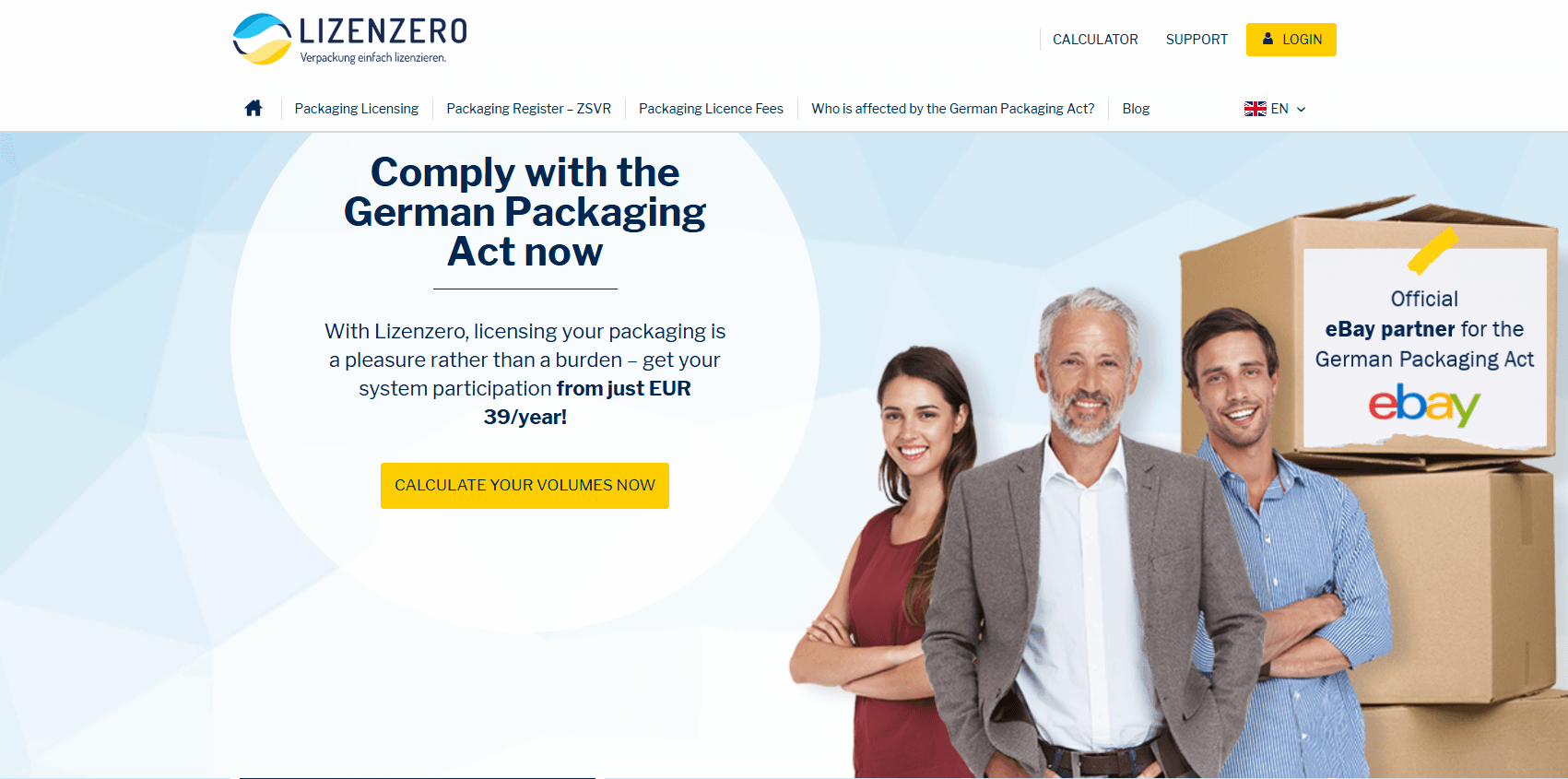
Signing a system participation agreement
5. Ongoing data reporting and fee payments
Sellers must regularly submit volume reports in the LUCID portal. These reports must align exactly with the figures submitted to your dual system partner. Based on these volumes, you will pay licensing fees that cover the costs of recycling, sorting, and collecting your packaging waste.
Placing products on the German market
Entering the German market requires meeting high quality standards and adhering to stringent environmental laws. As mentioned, the cornerstone of this compliance is the LUCID registration, giving you the legal right to place packaging into circulation.
In the LUCID system, packaging is categorised – from retail and shipment packaging to specialist types like reusable packaging. Each must be accurately classified and reported. Your precise data regarding material types and weight forms the basis of your compliance reports.
Your system participation fees directly correlate with the volume and type of packaging you use. These funds finance Germany’s recycling and sorting infrastructure, directly contributing to waste reduction and the circular economy.
Post-registration duties for sellers
Getting registered is just the beginning. To stay compliant with VerpackG, sellers must meet ongoing obligations. The most critical is submitting the annual volume report, which must reflect the exact amount and type of packaging placed on the market over the previous year.
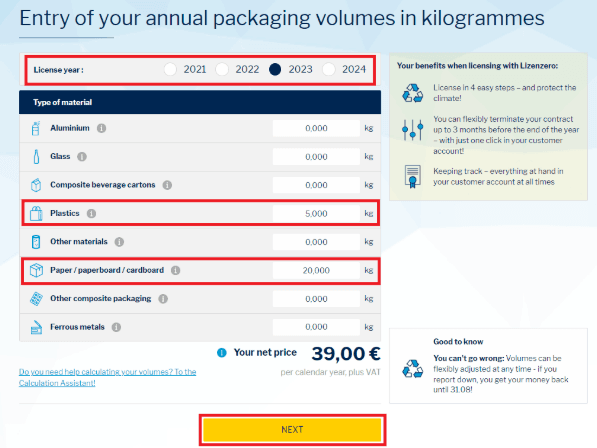
Post-registration duties for sellers
You must also stay informed of any regulatory shifts and keep your master data up to date. If your company structure changes, or if you alter the type or weight of your packaging materials, you must update the Packaging Register immediately. Inaccurate data can lead to serious discrepancies in your reporting down the line.
Consequences of non-compliance with LUCID
Failing to register or neglecting your reporting duties can result in severe financial penalties and reputational damage. The maximum fine for non-compliance can reach up to €200,000. For most e-commerce businesses, a fine of this magnitude could be devastating.
We’ve seen firsthand the trouble caused when sellers underreport their packaging volumes (such as plastics) to save on fees. Eventually, regulatory audits catch up, leading to heavy sanctions. Every seller must strictly adhere to the German Packaging Act, complete their LUCID registration, and report volumes honestly.
Administrative consequences
The ZSVR actively monitors compliance. If irregularities are spotted, alongside the aforementioned fines, businesses can face an immediate sales ban in Germany. Over time, this means catastrophic revenue loss and being shut out of one of Europe’s largest e-commerce markets.
Business consequences
Ignoring LUCID will also severely damage your relationships with marketplace partners. Major platforms like Amazon, eBay, and Kaufland are legally required to check if sellers are LUCID-compliant. If you cannot provide a valid LUCID registration number (your EPR number), the marketplace will block your account or suspend your listings, instantly halting your sales.
Benefits of registering in the LUCID system
Treat LUCID as more than just red tape; it’s a positive milestone in your business growth. By accurately reporting packaging volumes and funding recycling programmes, you are actively reducing waste and protecting the environment. This compliance transforms into a solid Corporate Social Responsibility (CSR) strategy that supports your broader business needs, boosting customer loyalty and giving you a competitive edge.
Furthermore, strict adherence to VerpackG builds trust. Today’s consumers are highly eco-conscious and prefer brands that operate transparently and sustainably. Buyers increasingly favour products from companies that champion ethical business practices.
Embracing sustainable practices through LUCID aligns your brand with global shifts towards a circular economy and lower carbon footprints. Businesses engaged in these initiatives prove they are future-ready. It elevates LUCID from a simple admin task to a strategic move for long-term brand value.
Time to act!
LUCID registration is your ticket to building a robust, legal, and sustainable business in Germany. If you are planning an expansion across the border, this is a non-negotiable step. View it not as a burden, but as an investment in your company’s future.
Accurate reporting and partnering with recycling schemes are essential to mitigating waste. It’s a chance to show the market that your business doesn’t just chase profits, but actively safeguards the planet.
Don’t wait around – register with LUCID today. If you need help navigating international expansion or want to ensure your marketplace listings are fully compliant and optimised, book a free consultation with our experts at Raise Your Sales. It’s your time to lead by example!
Did you find this article helpful?
This article has no ratings yet — be the first.
Autor
Marcin Truch
E-commerce Team Leader
I’ve been in e-commerce for over five years, starting in customer service before shifting my focus toward driving sales on webstores and marketplaces. Currently, my deepest expertise lies in managing Allegro and eBay accounts, while I’m constantly evolving my Amazon knowledge. I’m a big believer that user experience—specifically high-quality descriptions and visuals—is the foundation of a successful brand. In my spare time, I’m a petrolhead and a football fan; I’ve also recently rediscovered my love for LEGO thanks to my son.