
 Polski
 Čeština
 Slovenčina
 Deutsch
 Italiano
 Español
Manufacturer vs distributor: Who wins on marketplaces?
Manufacturer vs distributor – who has the upper hand on a marketplace? It’s a common question for businesses looking to expand their online sales. In this article, we’ll compare both models, highlight their pros and cons, and reveal who holds the greatest potential on platforms like Amazon, eBay or Kaufland Marketplace. You’ll find out which approach works best across different markets, where the
 Wojciech PiszczekCEO & Founder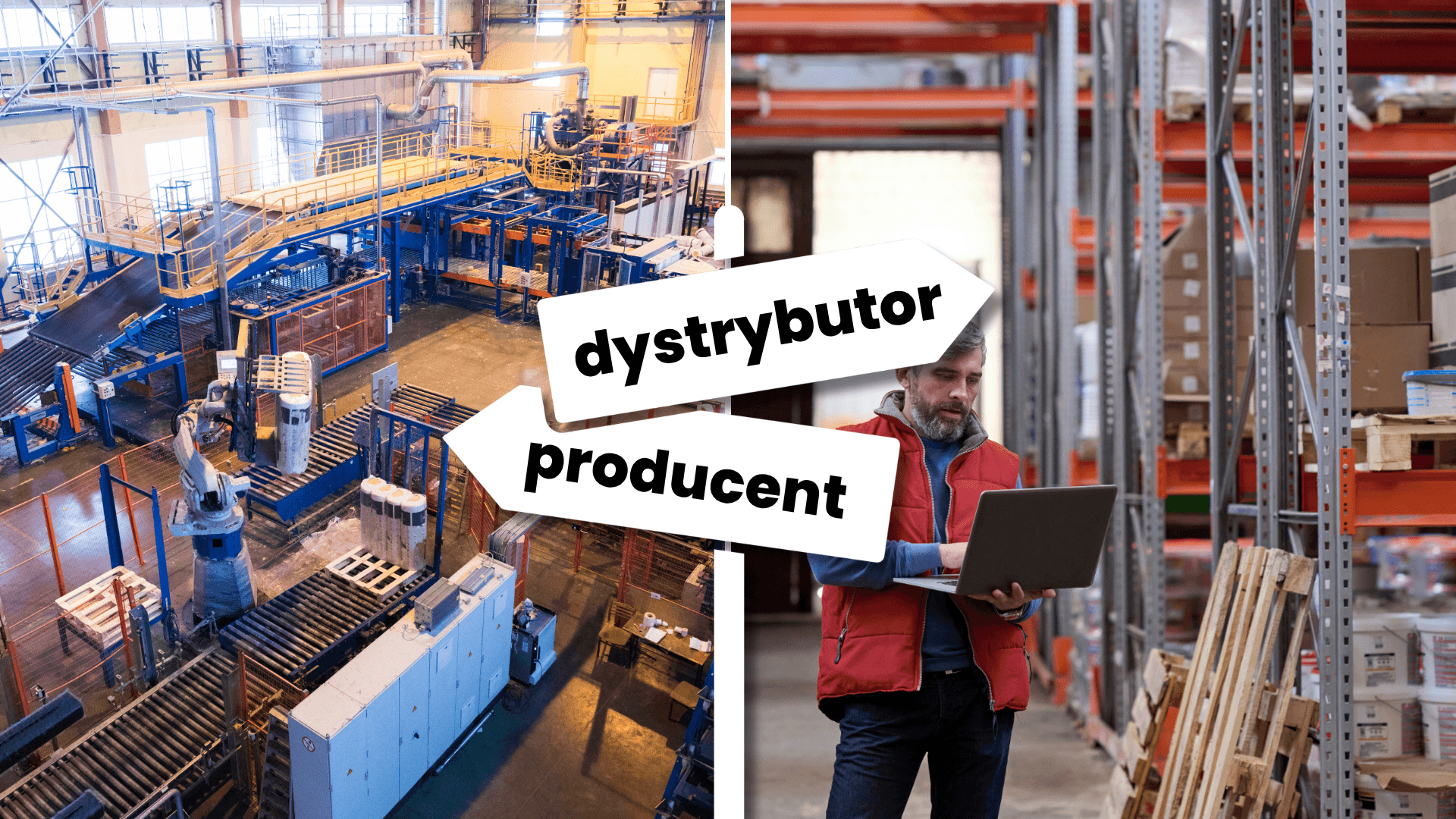
The manufacturer says, “No one knows my product better than I do!” The distributor replies, “That might be true, but I know how to sell it better!” And so begins the classic marketplace showdown. Who wins? The one who truly understands the market, the customers, and… the platform algorithms. In this article, we’re putting both business models under the microscope to see who comes out on top. Expect an honest, practical breakdown – no fluff.
Manufacturer vs distributor: Who has the upper hand?
Both manufacturers and distributors have their rightful place on marketplaces, but their paths to success are vastly different. Each option comes with its own unique advantages, as well as challenges to overcome. Ultimately, these two models require completely different approaches.
Manufacturers need to invest in brand building, trademark protection, and product development. Meanwhile, distributors must be prepared for fierce price competition and continuously expanding their product ranges. Each model demands different tools and strategies, but both can thrive on marketplaces if you understand your strengths and leverage them effectively.
The distributor
If you’re reselling products from established brands, brace yourself for stiff competition. On marketplaces, you’ll encounter dozens – sometimes hundreds – of other sellers offering the exact same item. In these scenarios, the battle almost always comes down to price. Customers naturally gravitate towards the cheapest option, forcing you to slash your margins to the absolute limit just to stay competitive and win the Buy Box.
Furthermore, it’s usually the biggest players who win these price wars – those with access to deeper pockets, better wholesale terms, or direct contracts with manufacturers. As a smaller distributor, your room for manoeuvre is limited; you can’t drop prices indefinitely without your business becoming unprofitable.
An additional hurdle for distributors is the lack of control over the overarching sales strategy. If a manufacturer decides to embrace marketplaces, they might launch their own storefront and become your direct competitor. As a result, you not only lose any exclusivity but also end up competing against the very brand you’re distributing.
On a more positive note, as an agency, we manage accounts for many distributors who are highly successful on marketplaces and achieve excellent results. So, we’re certainly not writing them off. However, their success demands a great deal of commitment, flexibility, and a constant readiness to handle price pressure, making this route arguably more challenging than direct-to-consumer sales by manufacturers.
The manufacturer
If you are a manufacturer, marketplaces represent a massive opportunity. When you own the product, you don’t have to worry about competitors listing the exact same goods. You dictate the pricing, build the brand, and control the entire sales strategy. This allows you to bypass the dreaded price wars that plague distributors.
Owning your product also unlocks far more opportunities for promotion and brand building. On platforms like Amazon, you gain access to powerful marketing tools, including PPC campaigns, Amazon Brand Registry, and Amazon Vine. All these features empower you to make your listings stand out and reach a broader customer base.
Who makes more money on a marketplace: The distributor or the manufacturer?
There’s no simple, one-sentence answer to this question.
In theory, the manufacturer has the upper hand. They create the product, know its backstory, understand the manufacturing process, and guarantee its quality. They can set prices, benefit from lower unit costs, and retain tighter control over margins. Yet, they often lack marketplace expertise, experience in creating high-converting listings, knowledge of advertising tools, or simply the time to manage it all.
On the flip side, the distributor – despite higher sourcing costs – is often a master of sales. They know exactly how Amazon or Allegro operate. They know how to write compelling descriptions, optimise ads, and react swiftly to algorithm updates. They can scale quicker, rotate stock efficiently, and test out various niches with ease.
Ultimately, who earns more comes down to multiple factors: the product category, the business model, stock availability, pricing policies, and the level of dedication to the sales process. There are manufacturers who generate fantastic revenue because they’ve learned to operate with the agility of a distributor. And there are distributors who outperform manufacturers because they adapted to marketplace realities much faster.
Summary
Being a manufacturer and being a distributor are two entirely different ways of operating on a marketplace. Both have their pros and cons. The key is understanding your strengths and choosing a strategy that will drive sales and profits. If you’re unsure where to begin, book a free consultation with us. We’ll show you the best way to launch and grow your online sales across European and global marketplaces.
Did you find this article helpful?
This article has no ratings yet — be the first.
Autor
Wojciech Piszczek
CEO & Founder
I’ve been immersed in e-commerce for more than ten years, with a core focus on helping brands scale onto international platforms like Amazon, eBay, Kaufland, and eMAG. My experience covers the entire sales lifecycle—from high-level strategy and logistics to marketing and conversion optimisation. I help businesses not only enter new markets but scale sustainably, ensuring they avoid the costly pitfalls often faced by those just starting out.