
 Polski
 Čeština
 Slovenčina
 Deutsch
 Italiano
 Español
Amazon: What is it, how does it work, and why does it matter?
For most internet users, Amazon is synonymous with online shopping. However, there is far more behind the name than just a digital storefront. It is a highly sophisticated e-commerce platform, backed by cutting-edge infrastructure, that fundamentally reshapes how we buy, sell, and conduct business today. In this article, we will address the essential questions: what Amazon.com actually represents,
 Magdalena JuraszekNew Business Manager
Understanding Amazon’s business model
Amazon launched in 1994 when it was founded by Jeff Bezos in his Seattle garage. Initially operating strictly as an online bookseller, Amazon has grown rapidly, diversifying into broader categories to earn its reputation as the “ultimate everything store.” Over the decades, it has evolved into one of the world’s most influential corporations – dominating not just retail, but logistics, media, and enterprise technology.
Today, it is a vast commercial network connecting millions of buyers and sellers within a unified marketplace. Operating across more than 20 global markets, it maintains a robust presence in most developed nations. Its operations span retail, wholesale, and the aggressive development of its own hardware and private-label brands.
Key brands and subsidiaries
Over the years, Amazon has acquired key players to expand its global footprint. This includes the grocery chain Whole Foods, the footwear retailer Zappos, the live streaming service Twitch, and the film database IMDb. Its core proprietary subsidiaries also include:
- Kindle: Its famous e-reader line and comprehensive digital book network.
- Prime Video: A leading streaming platform featuring original films and television productions.
- Alexa: An industry-leading voice assistant and smart home hardware range.
- Amazon Web Services (AWS): The world’s most dominant provider of cloud computing services. It offers a robust infrastructure relied upon by countless enterprises, including Netflix, Spotify, NASA, government institutions, and ambitious startups.
Amazon as a digital marketplace
In the simplest terms, Amazon is the world’s largest digital storefront. Yet, its business model goes far beyond traditional retail. Not only does it hold its own vast inventory, but it also opens its infrastructure to third-party businesses and individuals, enabling them to trade internationally.
Customers can source virtually anything, from consumer electronics and apparel to fresh groceries. It serves as a central hub uniting millions of users and merchants, delivering an unprecedented scale of choice alongside unparalleled purchasing convenience.
How does the Amazon platform actually work?
Grasping Amazon’s operational mechanics is key to understanding its global dominance. It is not just a shop, but a deeply integrated system of services that fuel its success. This framework includes:
- Marketplace: A trading platform where thousands of international vendors offer their inventory to a global audience.
- Amazon FBA (Fulfillment by Amazon): A comprehensive logistics programme where Amazon takes full responsibility for warehousing, picking, packing, dispatch, and customer service.
- Amazon FBM (Fulfillment by Merchant): The alternative to FBA, where the independent seller manages the entire end-to-end fulfilment process.
- Amazon Prime: A highly successful subscription model giving users fast delivery and premium digital entertainment.
Why are FBA, FBM, and Prime essential to your strategy?
FBA, FBM, and Prime are the three pillars that dictate both sales speed and the consumer experience. Mastering these is critical if you intend to scale your brand on the platform or simply want to use its services with commercial awareness.
Amazon FBA
Fulfillment by Amazon (FBA) is a logistical framework designed to streamline your operations, especially if rapid scaling and international reach are your main goals. Essentially, you send your inventory in bulk to Amazon’s logistics centres, and the company handles the rest:
- Product storage.
- Picking and packing orders.
- Last-mile shipping to customers.
- Handling returns and complaints.
This model is exceptionally attractive for many vendors. However, it is important to remember that FBA comes with significant extra fees, which can cut into your margins if not carefully calculated. It is rarely the best fit for low-margin or highly seasonal goods. Before committing, you must rigorously check your numbers and understand the costs involved.
Amazon FBM
Not every merchant chooses the FBA model. The main alternative is Fulfillment by Merchant (FBM), which means managing the entire process internally. Under this option, you as the merchant keep full responsibility for warehousing stock, packaging parcels, shipping them, and directly managing any returns or queries.
While FBM requires much more “operational heavy lifting,” it gives you absolute control over your processes and overheads. For businesses with established logistics or those handling bespoke goods, FBM often proves to be a more flexible and cost-effective route.
Amazon Prime
Amazon Prime is a paid subscription offering customers a suite of benefits, including free two-day (or even next-day) delivery and access to the Prime Video library.
From a retailer’s perspective, securing the Prime badge on your listings (usually by using FBA) can drastically boost visibility and conversion rates. However, it doesn’t guarantee success. Consumers now expect items to be available via Prime, which can pressure sellers into the programme even when the margins don’t strictly justify it. You must assess whether Prime participation truly aligns with your overall strategy.
What is actually sold on Amazon?
Amazon offers literally everything. From high-end electronics and books to toys, furniture, and groceries, every conceivable product category finds a place within an inventory that expands continuously.
It is crucial to remember that a vast proportion of this stock does not come directly from Amazon itself. As previously noted, a significant percentage of the catalogue is supplied by third-party merchants – ranging from multinational corporations to small independent brands and resellers.
How to set up an Amazon Seller Account
To start trading, you need to create an Amazon Seller Account. This serves as your central dashboard to manage your entire business: uploading products, setting prices, tracking orders, and running ad campaigns.
While the technical registration is relatively simple, selling successfully requires rigorous planning. A successful launch is always based on thorough market analysis – understanding consumer demand and positioning your products effectively within profitable categories.
Amazon and e-commerce: What you need to know
Amazon is an absolute titan in e-commerce, but it isn’t necessarily the perfect fit for every business model. Its main strengths are its massive user base, world-class logistics, and sophisticated tools like algorithmic recommendations and paid product promotion.
On the other hand, competition is incredibly high. The rules of the game are dictated entirely by Amazon, requiring sellers to be relentlessly adaptable and focused on cost optimisation.
For some companies, Amazon is one of many sales channels. For others, it is the primary source of revenue. Ultimately, success depends on your strategy, margins, and operational readiness. While it is a lucrative channel, we believe it’s unwise to base your entire business on a single platform. Diversification across various channels is always the safer, better bet.
The merchant’s role in the customer experience
A fundamental pillar of Amazon’s success is its obsessively customer-centric ethos. Buyers trust the platform because they know transactions will be seamless and problems resolved quickly.
Amazon relies on fast delivery, flexible returns, and millions of verified reviews to help users decide. However, customer service isn’t just a department at Amazon – it is the strict contractual responsibility of every independent seller on the platform.
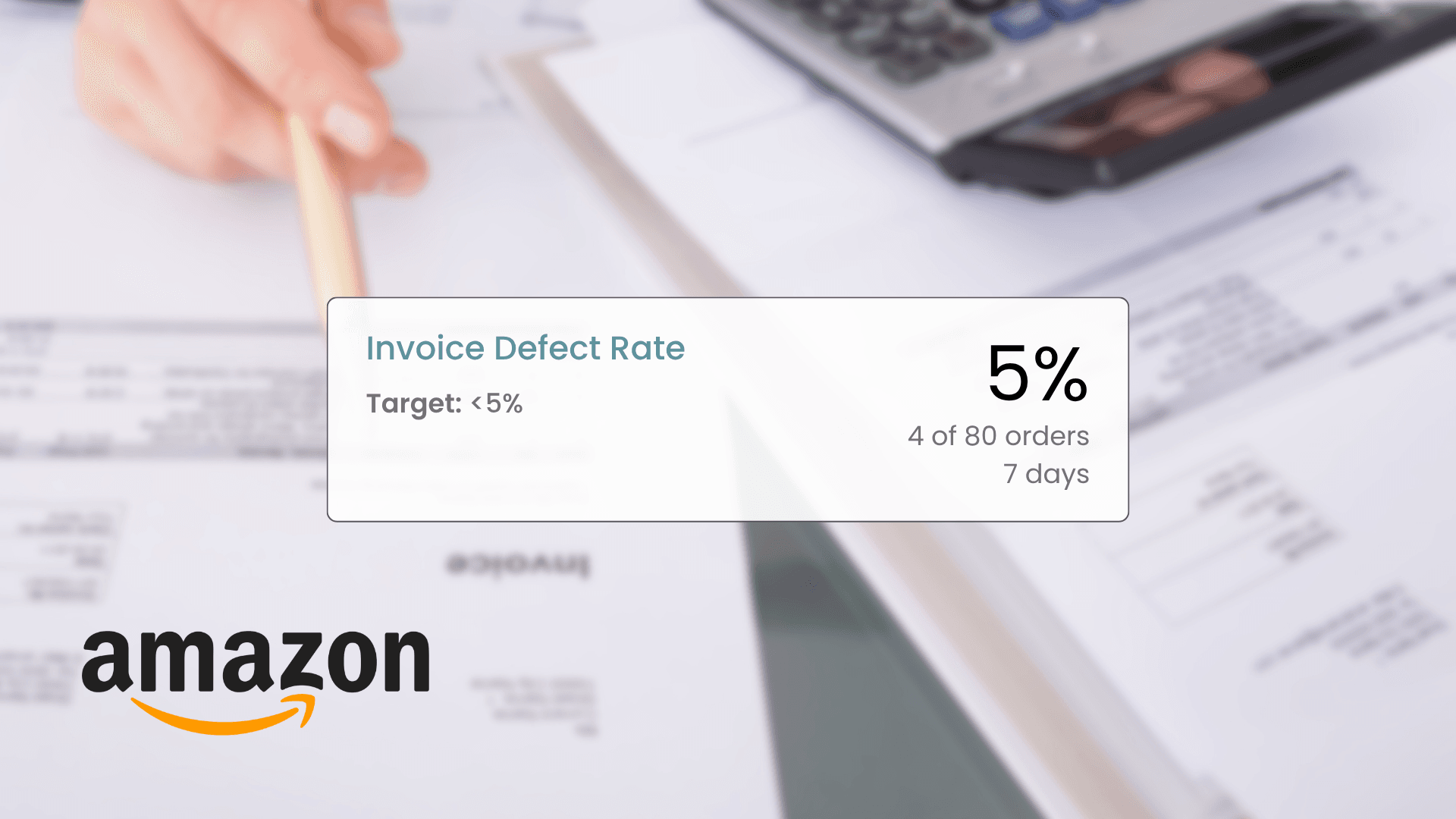
Account health: How performance metrics impact your sales
Sellers play a critical role in maintaining Amazon’s rigorous standards. You must ensure:
- Punctual shipments: Delayed deliveries are heavily penalised and will hurt your search ranking.
- Rapid response times: You must answer buyer messages within 24 hours, including weekends.
- Frictionless returns: Your reverse logistics and dispute resolution must be top-notch.
- Impeccable product quality: Negative reviews about material quality will quickly damage a vendor’s reputation.
The commercial impact of customer service
Vendors who consistently deliver premium service are rewarded: their listings get better organic positioning and they unlock tools like the ‘Amazon’s Choice’ badge. Conversely, neglecting these metrics will lead to warnings, suppressed visibility, or blocked accounts, meaning you lose the ability to trade entirely.
Amazon’s global fulfilment infrastructure
Amazon operates hundreds of massive distribution hubs globally, including several advanced facilities in Poland. These operations are backed by state-of-the-art warehouse management, advanced robotics, and an immense network of delivery partners.
Amazon by the numbers
- More than 300 million active consumer accounts worldwide.
- More than 2 million active third-party sellers.
- Over 500 global logistics and distribution centres.
- Thousands of proprietary private-label brands.
- Hundreds of billions of dollars in annual gross revenues.
The corporation employs hundreds of thousands of staff and funnels massive capital into emerging technologies, supply chain automation, and digital infrastructure.
Summary: Is Amazon the right move for your business?
Amazon is a highly complex, globally integrated engine. It grants unparalleled access to customers and turnkey infrastructure, but it also presents significant costs and strict compliance demands.
For countless companies, selling on Amazon represents an extraordinary growth opportunity. With interconnected European portals and frameworks like the VAT-OSS system, businesses can achieve seamless cross-border expansion without endless tax registrations.
However, Amazon is a tool – not an end in itself. It is well worth considering as part of a broader sales strategy, but only with a clear-eyed awareness of its limitations and costs. Meticulous execution yields great returns, but sustainable success demands constant flexibility and rigorous preparation.
Did you find this article helpful?
This article has no ratings yet — be the first.
Autor
Magdalena Juraszek
New Business Manager
I’ve been an e-commerce and marketplace specialist since 2016, and I’ve always been fascinated by Amazon’s global potential. For me, the key to success lies in presentation – how a listing looks and how a brand is perceived. I go the extra mile to ensure every project aligns with current trends and customer expectations. I value building genuine connections and exchanging insights with clients. When I’m not at work, I love travelling to broaden my horizons and find fresh inspiration.