
 Polski
 Čeština
 Slovenčina
 Deutsch
 Italiano
 Español
Amazon Merch on Demand: Is selling custom t-shirts on Amazon worth your time?
Wondering what Amazon Merch on Demand actually involves and whether you can genuinely turn a profit? It’s a question on the minds of countless creators and brand owners keen to test the e-commerce waters without pouring capital into manufacturing and inventory. Here’s how the platform works in practice, and whether it fits your expansion strategy.
 Magdalena JuraszekNew Business Manager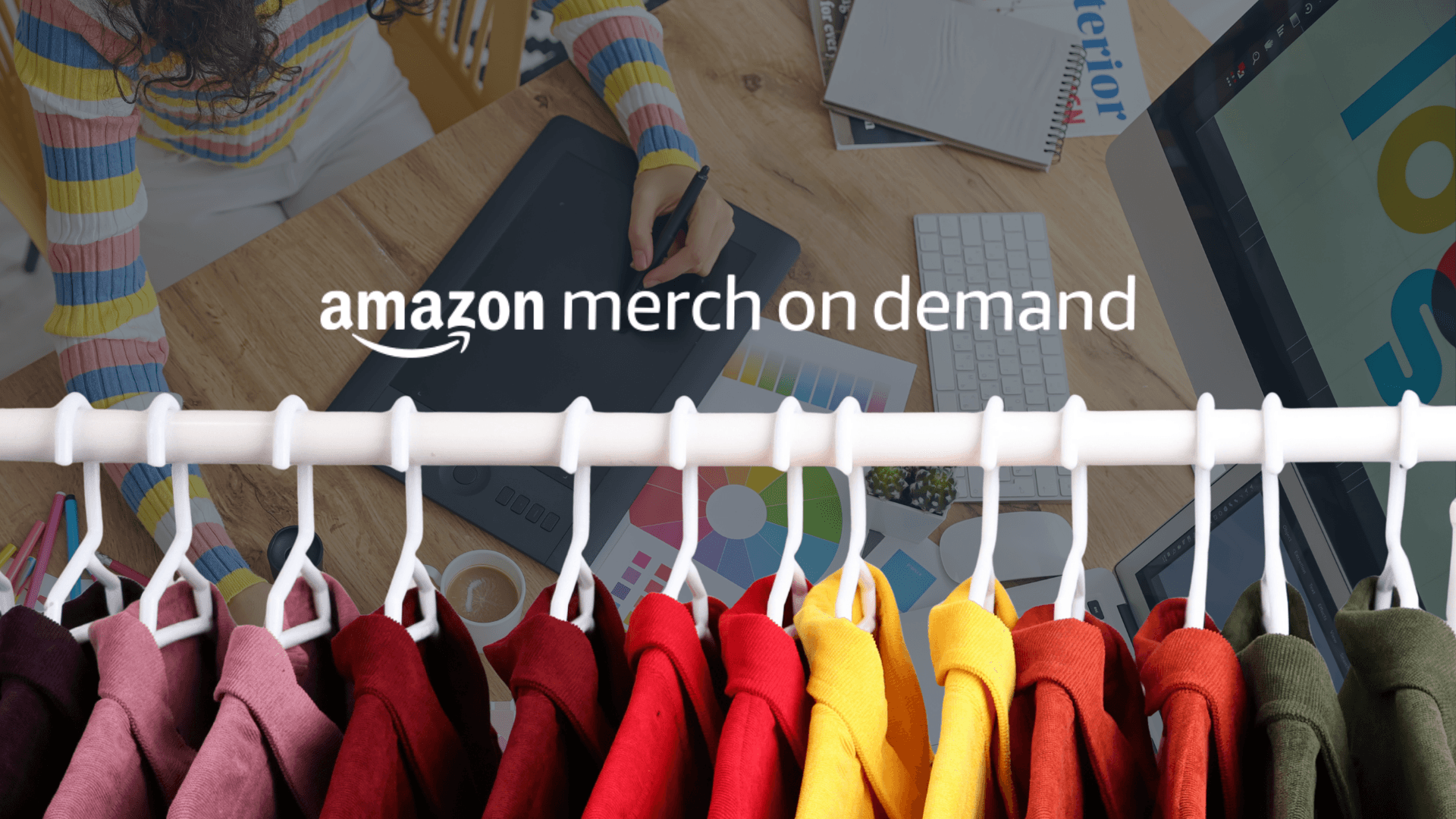
What is Amazon Merch on Demand, and why should you care?
Amazon Merch on Demand (formerly Merch by Amazon) operates on a print-on-demand model. Your designs are produced on physical items – from t-shirts and hoodies to tote bags and tech accessories – only when a customer places an order. This eliminates production waste and doesn’t tie up any working capital in stored inventory.
For creators and brands keen to explore selling on Amazon without upfront capital, it’s an accessible entry point. Instead of sourcing suppliers, buying screen-printing equipment, or managing stock, you simply upload your graphics, set your pricing, and Amazon handles the rest – including printing, packaging, shipping, and customer support.
However, that convenience comes with trade-offs. You have no direct control over print quality, fulfilment speeds, or the unboxing experience. Amazon sets base operational costs and deducts them from the retail price, meaning profit margins per unit are relatively slim. Amazon Merch on Demand is certainly not a shortcut to instant wealth, but rather a flexible tool for market testing and brand exposure.
The primary draw is immediate access to global traffic, exposing your listings to millions of active shoppers across the UK, Europe, the US, and beyond. Yet listing a shirt doesn’t mean customers will magically find it. Organic reach depends heavily on algorithm ranking, design relevance, keyword optimisation, and niche saturation.
For modern e-commerce brands, Amazon Merch on Demand serves three purposes:
- A fast prototyping tool for new product concepts.
- A low-risk secondary revenue stream alongside existing online stores.
- A simple way to create and sell custom merchandise with minimal hassle.
How Merch by Amazon works: getting started
Create an account and submit your application
Head to merch.amazon.com to apply. You can set up a new profile or log in using an existing Amazon account. Unlike standard Amazon Seller Central accounts, Merch on Demand operates on an application-and-approval basis.
During setup, you’ll need to provide:
- Official business name (or personal legal name if operating as a sole trader).
- Bank account details for royalty payouts.
- Tax identification details (TIN / VAT / UTR).
- A brief summary of your business background and experience.
Because Amazon strictly enforces copyright and trademark compliance, applications are vetted manually. Approvals aren’t instant and can take anywhere from a few days to several weeks. Make sure your business description looks polished and professional from the start.
Designing your products
Once approved, you can create graphics using standard design software such as Adobe Photoshop, Illustrator, or Canva. Amazon requires high-resolution PNG files with transparent backgrounds (4500 x 5400 pixels at 300 DPI). Crisp, quality designs are crucial to standing out and avoiding print alignment errors.
In the dashboard, select your product type (t-shirts, hoodies, PopSockets, tote bags), upload your artwork, and write your titles, bullet points, and descriptions. Target specific keyword phrases naturally (such as funny barista t-shirt, eco-friendly tote bag, or gift for yoga teachers). Avoid trademarked terms at all costs – Amazon penalises intellectual property breaches heavily.
Publishing and selling on Amazon Merch
Submitted graphics undergo automated and manual compliance checks. Once approved, your designs go live in Amazon’s main catalogue.
From there, Amazon handles production and logistics. While sellers focus on design and keyword research, Amazon prints and ships every order directly to the buyer. That said, a listing rarely sells itself. To stand out against millions of items, driving external traffic or running targeted marketplace ads is often necessary to gain initial momentum.
Royalties and payouts
Amazon Merch on Demand pays a royalty for every item sold. Your payout depends on the retail price you set, minus Amazon’s base manufacturing costs and applicable taxes. For example, a t-shirt listed at £17.99 / $19.99 typically yields roughly £2.50–£4.00 / $3–$5 in royalties.
Why use Amazon Merch?
Key advantages
- Zero financial risk: You incur no production costs until an actual customer buys.
- Global reach: Instant exposure across Amazon’s international storefronts.
- Full operational automation: Amazon manages printing, shipping, and customer care.
- Scalable passive revenue: Published designs remain live indefinitely.
- Rapid product testing: Validate slogans and graphics before manufacturing products in-house.
Challenges and platform limitations
- Tier limits: New accounts start with restrictive upload limits (usually Tier 10). As sales accumulate, you unlock higher tiers (Tier 25, 100, 500+). This prevents spam uploads, but requires patience at the start.
- Saturated competition: Broad categories like holidays or pets are crowded. Success requires targeting tight niches rather than generic themes.
- Strict IP rules: Accidental trademark infringement can lead to swift account suspension. Stick strictly to original graphics and avoid pop culture or trademarked terms.
- Low profit margins: Base print costs mean profit per unit is small, requiring substantial sales volume for meaningful revenue.
- Account vetting and approval times: Not all applicants are accepted, and waiting times vary based on regional demand and review volume.
- Limited organic visibility without ads: New listings without a sales history struggle to get seen. Investing in Amazon Ads or driving traffic via social media is often necessary to secure those crucial initial sales.
How to succeed on Amazon Merch
Find a profitable niche. Many sellers start by targeting specific subcultures, hobbies, or professions rather than broad search terms like “funny t-shirt” (e.g. funny barista t-shirt, gravel cycling enthusiast, maths teacher gift).
Optimise for keywords. On-page SEO is vital. Work precise search terms naturally into your titles and bullet points to help Amazon’s search algorithm match your listing with relevant shoppers.
Focus on quality over quantity. Crisp visual assets, thoughtful typography, and strong graphic composition consistently outperform rushed bulk uploads.
Analyse and adapt. Regularly review sales reports in your Merch dashboard. Double down on winning design styles, high-converting keyword themes, and successful colour combinations.
Amazon Merch vs Amazon KDP
While Amazon Merch on Demand focuses on apparel and physical merchandise, Kindle Direct Publishing (KDP) offers a parallel print-on-demand model for low-content paper goods like notebooks, planners, and logbooks. Using both lets brands test slogans and graphic concepts across clothing and stationery at the same time, opening an additional sales channel without adding supply chain complexity or warehouse costs.
Handling tax and cross-border accounting for European sellers
When selling via Amazon Merch on Demand from the UK or continental Europe, you’re granting Amazon a licence to use your artwork, for which you receive royalty payments.
During onboarding, you’ll complete US tax interview forms (W-8BEN for individuals or W-8BEN-E for registered business entities) to benefit from double taxation treaties between the US and the UK or European nations, avoiding unnecessary withholding tax at source.
From a VAT perspective, Amazon acts as the seller of record to the end consumer, meaning you don’t charge VAT on individual consumer transactions – your earnings are categorised as licensing royalties. Keep detailed sales dashboard reports for your local corporate or personal tax filings.
Summary
Amazon Merch on Demand gives creators and brands a low-risk way into selling custom products without committing funds to production, warehousing, or fulfilment. While straightforward in concept, executing it successfully takes real effort – primarily due to fierce competition, slim margins, and limited control over the customer experience.
For creators, it’s a practical test bed for artwork, helping discover which slogans or graphics resonate with real buyers. For established businesses, it offers a cost-effective way to validate brand merchandise or new concepts without upfront manufacturing expenses. However, it’s far from a quick path to passive income. Sustainable sales require constant design iterations, a solid grasp of Amazon’s search algorithms, and often marketing spend to drive external traffic.
Ultimately, Amazon Merch works best as a supporting pillar within a broader e-commerce strategy rather than a primary business foundation. It minimises financial risk while yielding valuable consumer insights – provided you approach it with realistic expectations and treat it as a market-testing tool rather than a get-rich-quick scheme.
Did you find this article helpful?
Average rating 5.0 / 5 — 5 votes
Autor
Magdalena Juraszek
New Business Manager
I’ve been an e-commerce and marketplace specialist since 2016, and I’ve always been fascinated by Amazon’s global potential. For me, the key to success lies in presentation – how a listing looks and how a brand is perceived. I go the extra mile to ensure every project aligns with current trends and customer expectations. I value building genuine connections and exchanging insights with clients. When I’m not at work, I love travelling to broaden my horizons and find fresh inspiration.